 EN
EN


Sourcing a paper box in bulk is a decision that carries significant weight for any business. Whether you are managing packaging for retail products, gift sets, or industrial goods, the choices you make during the sourcing process directly affect product protection, brand perception, operational efficiency, and total cost. A poorly sourced paper box can lead to damaged goods, inconsistent branding, and inflated logistics expenses that erode profit margins over time.
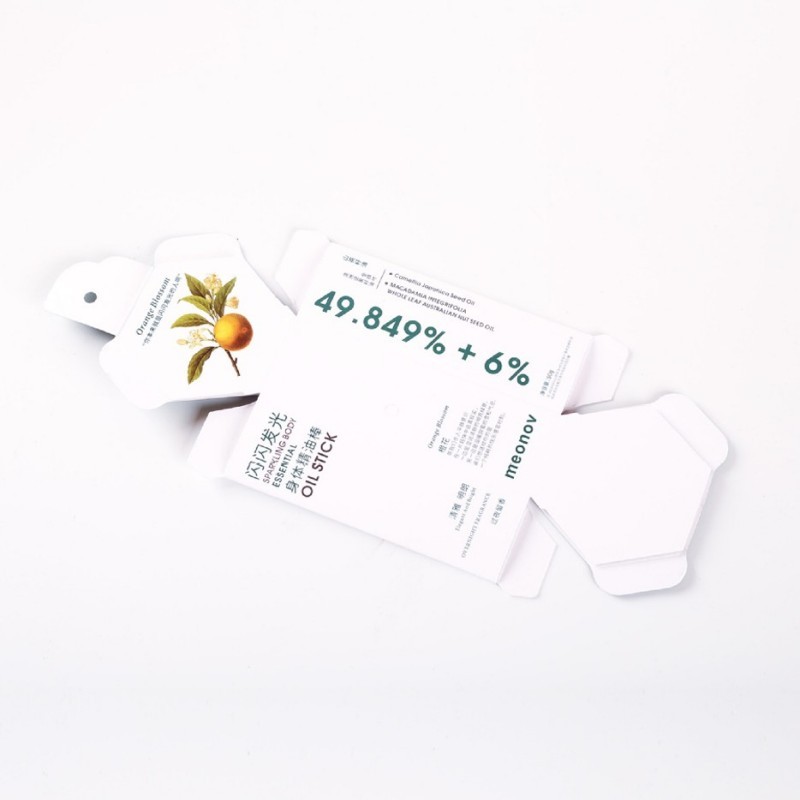
For procurement managers, product designers, and business owners who regularly place large orders, understanding the critical factors behind bulk paper box sourcing is not optional — it is a core competency. This article breaks down the most important considerations that should guide your evaluation process, from material selection and structural specifications to supplier reliability and minimum order terms. Applying these principles will help you make sourcing decisions that are both commercially sound and operationally practical.
Material Quality and Board Specifications
Understanding Paperboard Grades
The foundation of any paper box is its board material, and in bulk purchasing, material quality directly determines whether your packaging will perform consistently across thousands of units. Paperboard comes in several grades — including coated duplex board, greyboard, ivory board, and kraft board — each suited to different applications. A paper box intended for premium gift packaging requires a different board grade than one used for standard retail display.
When sourcing in volume, buyers must specify the board weight in grams per square meter (GSM) and verify that the supplier maintains consistency across production runs. Variations in board weight lead to structural inconsistencies, which become visibly apparent when packaging is stacked, stored, or shipped in large quantities. Always request material datasheets and, where possible, physical samples before committing to a bulk order.
Greyboard, commonly used in rigid paper box construction, is available in multiple thickness levels. For lid-and-base gift box formats, a thickness between 1.5mm and 2.5mm is standard, but the exact specification should match the weight and dimensions of the product being packaged. Heavier products demand denser board to prevent deformation under load, especially during stacked transit.
Surface Coating and Finishing Options
Beyond the raw board material, the surface treatment of a paper box plays a critical role in both durability and visual appeal. Common finishes include matte lamination, gloss lamination, soft-touch lamination, UV spot coating, and embossing. Each finish affects how the box looks on shelf, how it feels in the customer's hands, and how well it resists moisture and abrasion during shipping.
For bulk orders, it is important to confirm that the chosen finish can be applied uniformly at scale. Some specialty finishes — such as foil stamping or debossing — require additional tooling and setup time, which should be factored into lead times and per-unit costs. A paper box with a premium finish that arrives with inconsistent coating across 5,000 units represents a real operational risk, so process capability discussions with suppliers are essential.
Structural Design and Dimensional Accuracy
Box Style and Functional Requirements
The structural format of a paper box must align precisely with its intended function. A lid-and-base rigid box, for example, offers excellent presentation value and structural integrity, making it well suited for gift packaging, electronics, and cosmetics. Folding cartons serve different purposes — they assemble flat and are more efficient for high-volume automated packing lines. Choosing the wrong box style for your application creates friction at every stage of the supply chain.
When placing bulk orders, dimensional accuracy is non-negotiable. A paper box that is even two millimeters too wide or too narrow can create problems on automated assembly lines or cause product movement during transit. Suppliers must provide verified tolerance specifications, and buyers should include dimensional acceptance criteria in their purchase agreements. Prototype validation and first-article inspection before full production runs are standard practices that protect bulk orders from costly defects.
It is also worth considering how the paper box interacts with other packaging components. If the box ships inside a corrugated outer case, the fit between the two must be tight enough to prevent shifting but loose enough for easy extraction. These tolerances should be tested under realistic logistics conditions before production is approved at scale.
Structural Integrity Under Logistics Stress
A paper box that looks perfect in a sample presentation may still fail under real shipping conditions. Bulk orders are typically stacked, palletized, and subjected to vibration and pressure during freight transport. The structural integrity of the box must be validated through compression testing and drop testing, particularly for heavier or more fragile product categories.
Moisture resistance is another factor that is often overlooked until boxes arrive at their destination deformed or weakened. If your supply chain involves cross-ocean shipping or storage in high-humidity environments, ask suppliers about moisture barrier treatments and how board performance is maintained under those conditions. A durable paper box is not only about aesthetics — it is about protecting the product inside across the entire distribution journey.
Customization Capabilities and Print Quality
Print Methods and Color Consistency
For brands placing large-volume orders, print quality and color consistency are defining factors in the sourcing decision. A paper box serves as a direct brand touchpoint, and when thousands of units are distributed, even minor color drift across production batches becomes visible and damaging to brand identity. Buyers should request color proofs and confirm whether the supplier uses offset printing, digital printing, or screen printing, as each method has different strengths at different order volumes.
Offset printing remains the preferred method for large-volume paper box production because it delivers highly consistent color output once the press is set up. Digital printing offers flexibility for shorter runs and variable data, but may show more color variation across extended production batches. Understanding which method your supplier uses — and what their color tolerance standards are — helps you set realistic expectations and contractual benchmarks before committing to full volume production.
Pantone color matching is a common requirement for brand-sensitive buyers. If your paper box must reflect a precise brand color, confirm that the supplier supports Pantone references and performs press checks before each major run. Color verification using spectrophotometer measurements adds an additional layer of quality assurance for high-stakes orders.
Customization Lead Times and Tooling Costs
Custom paper box production typically requires dieline development, print artwork preparation, and in some cases physical tooling for embossing or die-cutting. These setup steps take time and carry one-time costs that must be factored into total sourcing cost, not just per-unit pricing. For bulk purchasing, the setup cost per unit decreases significantly as order quantity increases, which is one of the key economic arguments for larger purchase commitments.
Lead times for custom paper box orders vary depending on the complexity of the design, the volume ordered, and the supplier's current production load. Typical lead times for rigid box production range from 20 to 45 days after artwork approval, though more complex designs or specialty materials can extend this window. Buyers should always build buffer time into their procurement schedules to account for sampling rounds, revisions, and quality inspections.
Supplier Reliability and Order Management
Evaluating Supplier Production Capacity
When sourcing a paper box at scale, supplier production capacity is just as important as product quality. A supplier that produces excellent samples but cannot fulfill 50,000 units within your required window is not a viable partner for bulk purchasing. During supplier qualification, ask directly about monthly output capacity, current order backlog, and how production is allocated during peak seasons.
Factory audits — either in person or through third-party inspection services — provide a realistic view of a supplier's true capabilities. A paper box factory with modern equipment, organized workflows, and documented quality control processes is significantly more likely to deliver consistent results on large orders than one relying on outdated equipment and manual processes. Capacity consistency across multiple production runs matters as much as any single-order performance.
Supplier communication responsiveness is another dimension of reliability. Delayed responses to pre-production questions, vague timelines, and resistance to third-party inspection are all signals that can indicate risk in a bulk order relationship. Strong supplier partners engage proactively, provide production updates, and are transparent about constraints before they become problems.
Minimum Order Quantities and Pricing Structures
Minimum order quantities (MOQs) for a paper box vary widely depending on the box type, customization level, and supplier scale. Rigid gift boxes typically carry higher MOQs than standard folding cartons due to the labor intensity of their construction. Buyers should compare MOQ thresholds against their actual demand forecasts to avoid over-ordering, which ties up capital in slow-moving inventory.
Volume pricing tiers are standard in paper box sourcing. Most suppliers offer meaningful per-unit cost reductions at defined quantity breaks — for example, at 1,000, 5,000, and 10,000 units. Understanding these tiers allows procurement teams to optimize order sizing for cost efficiency without creating excess stock. Negotiating flexible delivery schedules — where the full volume is committed but delivered in multiple tranches — is a practical strategy that balances cost efficiency with inventory management.
Sustainability and Compliance Considerations
Material Sourcing and Environmental Certifications
As regulatory requirements and consumer expectations around sustainable packaging continue to intensify, sustainability credentials have become a legitimate sourcing factor for paper box procurement. Buyers increasingly require suppliers to provide documentation of FSC (Forest Stewardship Council) certification, which confirms that the paper and board materials used come from responsibly managed forests.
Recycled content percentages are another dimension of sustainability that buyers should clarify upfront. A paper box made with a high percentage of post-consumer recycled board supports circular economy commitments and may be required to comply with specific market regulations in certain regions. Suppliers should be able to provide material traceability documentation rather than making unverified environmental claims.
Regulatory and Safety Compliance for Specific Industries
Certain industries — particularly food, cosmetics, and children's products — require that any paper box used in their supply chain complies with specific safety and migration standards. Food-contact packaging, for example, must meet standards governing ink migration and chemical safety, which vary by market. Cosmetics packaging may require compliance with fragrance and allergen labeling regulations that affect print and material choices.
Before finalizing a bulk order, confirm that the paper box materials and inks meet the relevant standards for your target market. Request formal compliance certificates and third-party test reports where required. Relying solely on verbal assurances from a supplier during bulk purchasing creates compliance risk that can result in costly recalls or market rejections.
FAQ
What is the typical minimum order quantity for a custom paper box?
Minimum order quantities vary by box type and supplier, but rigid paper box styles such as lid-and-base gift boxes typically start at 500 to 1,000 units for custom orders. Folding carton styles often have lower MOQs. For very large bulk orders, many suppliers can negotiate flexible delivery schedules that spread fulfilment across multiple shipments while locking in volume pricing.
How do I ensure color consistency across large paper box production runs?
Color consistency in large-run paper box production is best managed through Pantone color specification, pre-production press proofs, and spectrophotometer-based color measurement during production. Including color tolerance standards in your purchase agreement and requiring production samples from mid-run batches provides an additional quality checkpoint that protects against drift across extended print runs.
What certifications should I look for when sourcing a paper box sustainably?
FSC certification is the most widely recognized credential for sustainably sourced paper box materials. It confirms responsible forest management across the supply chain. Recycled content documentation, soy-based ink declarations, and compliance with regional extended producer responsibility (EPR) regulations are additional credentials relevant to sustainability-focused procurement programs.
How should I evaluate a paper box supplier's production reliability before placing a bulk order?
The most effective way to evaluate a paper box supplier before committing to bulk volume is through a combination of factory audits, reference checks from existing customers, sample quality assessment, and a structured first-article inspection process. Reviewing the supplier's quality management documentation and understanding how they handle non-conforming product during production gives you a realistic picture of their operational standards.
Table of Contents
- Material Quality and Board Specifications
- Structural Design and Dimensional Accuracy
- Customization Capabilities and Print Quality
- Supplier Reliability and Order Management
- Sustainability and Compliance Considerations
-
FAQ
- What is the typical minimum order quantity for a custom paper box?
- How do I ensure color consistency across large paper box production runs?
- What certifications should I look for when sourcing a paper box sustainably?
- How should I evaluate a paper box supplier's production reliability before placing a bulk order?
